

Strengthening Diagnostic Surveillance Networks
Summary: Partnered with a national government to overhaul its laboratory network for surveillance. Using GIS mapping and new data dashboards, Diag-Net optimized specimen transport and integrated LIMS systems, dramatically improving laboratory coverage and real-time monitoring.
Background:
In a country with scattered lab coverage and slow test turnaround, Diag-Net helped strengthen the national surveillance network. We applied Africa CDC’s framework for lab network mapping to redesign specimen flows and data systems.
Approach:
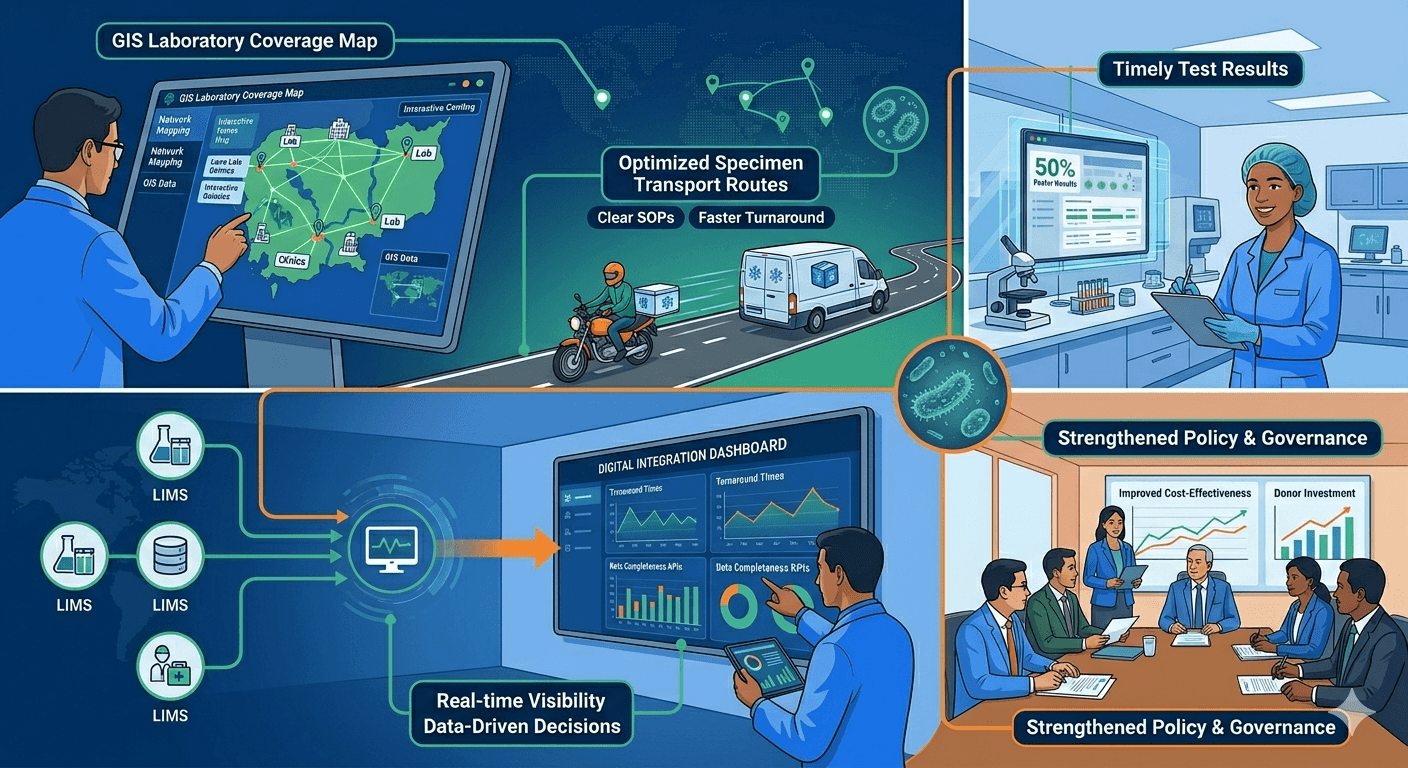
- Network Mapping: Collected geospatial data on all public health labs and clinics to identify coverage gaps with GIS.
- Specimen Transport Design: Created optimized sample referral pathways with clear SOPs and scheduled routes.
- Digital Integration: Linked laboratory information management systems (LIMS) across clinical and surveillance labs to a shared data dashboard.
- Performance Metrics: Defined KPIs for turnaround times and data completeness, and trained staff in routine monitoring..
- Governance: Worked with the health ministry to update policies and procedures reflecting the new network design.
Outcomes:
Test turnaround times were cut by roughly 50% in hard-to-reach areas, ensuring timely results for patients. Health officials gained visibility through the real-time dashboard, enabling faster resource allocation. The improved network attracted continued donor investment, and the ministry reported that the new system was more resilient and cost-effective.
“By integrating GIS mapping with LIMS dashboards, we turned data into actionable decisions for the lab system.”